A Website for Your Clinic: What Patients Look For Before They Call
A guide for clinic and medical center owners in Saudi Arabia: the pages a clinic website needs, contact from a mobile phone, and how the site stays correct after launch
Read moreA guide for company owners in Saudi Arabia: what automatic replies can handle, when a person must step in, and what WhatsApp's policy requires before you start
A chatbot helps when the same questions repeat and customers write at times when nobody answers. It does not replace your team: WhatsApp's policy requires a clear path to a person and the customer's permission before you message them. Start with one clear task and decide when a conversation goes to a person.
A chatbot is a program that answers customer messages for you. There are two kinds, and they can do very different things:
Most companies need both: a clear menu for what repeats, AI for what the menu does not cover, and an employee for what needs a decision.
A chatbot is not a goal in itself. It helps when you have a clear problem it solves:
Before you start, collect the twenty questions you really receive most and write their correct answers. That list is what the bot will work from, and it is also a good test of how clear your services are.
Some conversations should not be left to a bot alone: complaints, special cases, and anything that needs a decision or an exception. Above all, WhatsApp's own policy allows automation when replying within the customer service window, but requires prompt, clear and direct ways to reach a person, such as a transfer to a human agent in the chat, a phone number or an email.
So decide from the start:
Customers rarely mind an automatic reply, but they are annoyed when they cannot find a way to a human.
Before you connect any bot to your company number, know what the WhatsApp Business Messaging Policy requires:
These rules decide what a bot can do, so make them part of the design rather than something you find out after launch.
Do not start with a bot that does everything. Start with one task, watch it, then widen it:
Because the bot handles your customers' data, know what Saudi Arabia's Personal Data Protection Law requires of those who collect and process personal data. SDAIA's National Data Governance Platform also offers an AI ethics assessment tool you can use.
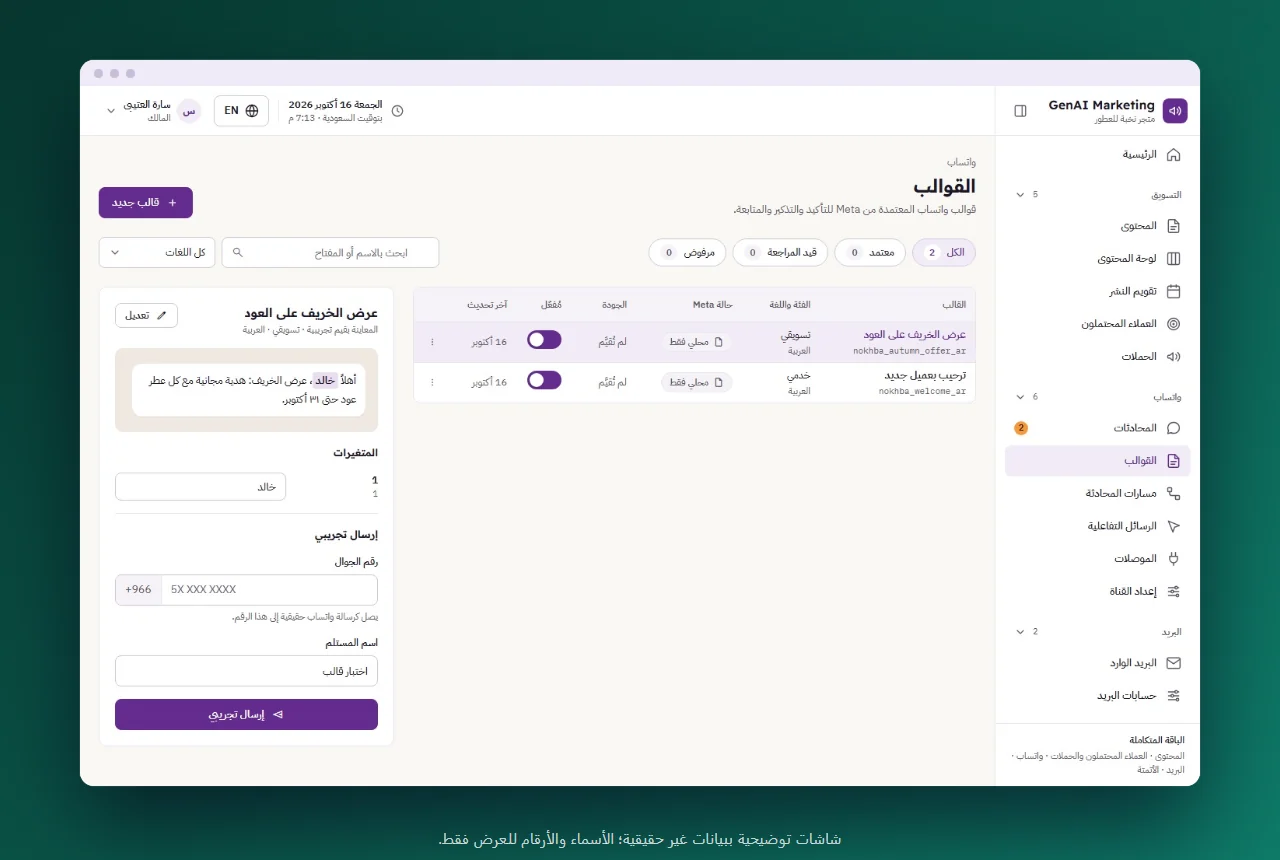
We have two ways that complete each other. The first is WhatsApp API: your team works on customer conversations from a shared screen on your company number, with message templates, interactive messages and automated workflows, and a new lead enters the lead list in the marketing system.
The second is AI employees: Nora answers customers and patients on WhatsApp and books from the free slots; Reem answers your customers on WhatsApp or Facebook, explains your products from your catalog and follows up with interested customers. Both hand to your team whatever needs an employee, and both say they are AI employees when asked. No action that changes your data is carried out without your approval, and each employee has an account and permissions that you can switch off.
What we do not offer: we do not promise that a bot handles every conversation alone, and we do not message people who have not agreed. Our team sets it up and runs it with you, step by step.
The app usually runs from one phone, with quick replies and simple greeting messages. A bot that understands questions, books and hands conversations to a whole team needs your company number connected to Meta's official WhatsApp platform.
After the 24-hour window closes, only message templates approved by Meta can be sent, and only to people who agreed to receive your messages.
Honesty builds trust. GenAI Hub's AI employees say they are not people when asked, and the conversation reaches your team when it needs an employee.
No. It handles what repeats and answers when nobody else can, but complaints, special cases and decisions stay with your team, and WhatsApp's policy requires a clear way to reach a person.
A guide for clinic and medical center owners in Saudi Arabia: the pages a clinic website needs, contact from a mobile phone, and how the site stays correct after launch
Read more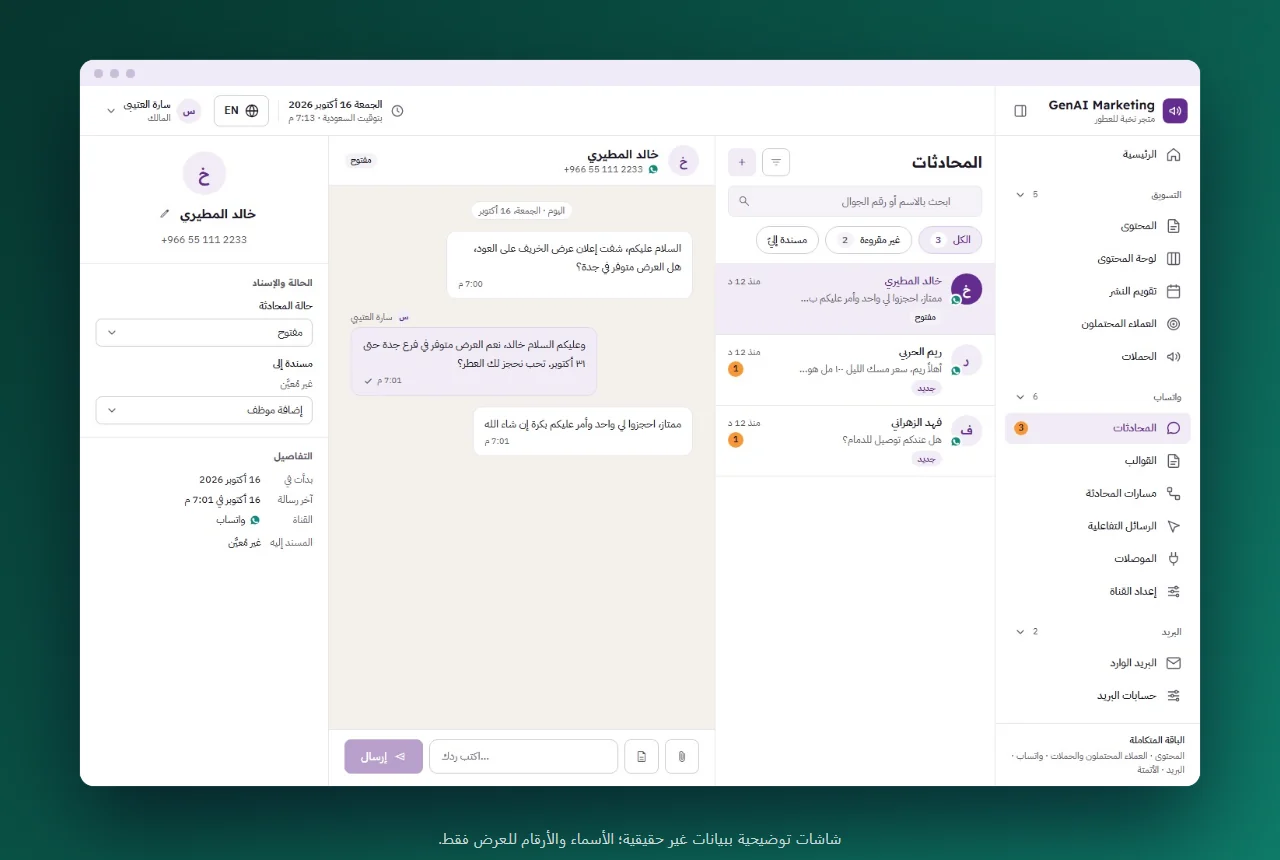
A practical guide for company owners and senior staff in Saudi Arabia: how to choose a first use of AI, try it, measure it, and know what stays with your team
Read more
A guide for company owners in Saudi Arabia: what your team edits itself, how to assign roles and permissions, and how to separate the draft from publishing
Read more