
A Website for Your Clinic: What Patients Look For Before They Call
A guide for clinic and medical center owners in Saudi Arabia: the pages a clinic website needs, contact from a mobile phone, and how the site stays correct after launch
Read moreA guide for company owners in Saudi Arabia: what to decide before design, how a company website differs from an online store, and who runs the site after launch
Decide what the website must do before you decide how it looks: a site that presents your company and brings in contact requests, or a store that sells and takes payments. Prepare the content before the design, ask who will edit the site after launch, where visitor requests go and how their data is protected. Then test the site on a phone and in search results.
Many company owners start by asking how the website will look. A more useful first question is: what should the website do for your company?
Write the answer in one line before you talk to any designer. Common answers:
The goal decides the number of pages, the effort, the cost and who works on the site after launch. One site with a clear goal does more than a large site that tries to do everything.
One of the most common searches in Saudi Arabia next to "website design" is "online store design". They are two different projects.
A company website presents you, your services and your projects, publishes articles and news, and receives contact requests. It suits companies that sell services, sell to other businesses, or close deals after talking to the client.
An online store shows products with prices and stock, and needs a cart, a payment gateway, shipping, a returns policy and someone who updates the products every day. Before you open a store, check the requirements of the Kingdom's E-Commerce Law and the registration of your business.
If your business closes after a call or a meeting, a company website is most likely what you need now. If you sell products at fixed prices to many customers, a store is closer to your goal.
Design serves the content, not the other way round. A site that is designed first and then waits for text is usually late, or ends with generic text that convinces no one.
At the start it is enough that these pages are complete and honest:
If your clients speak Arabic and English, write each language for its reader instead of translating word for word, and make sure the Arabic page reads right to left throughout. Use real photos of your work and your team wherever you can.
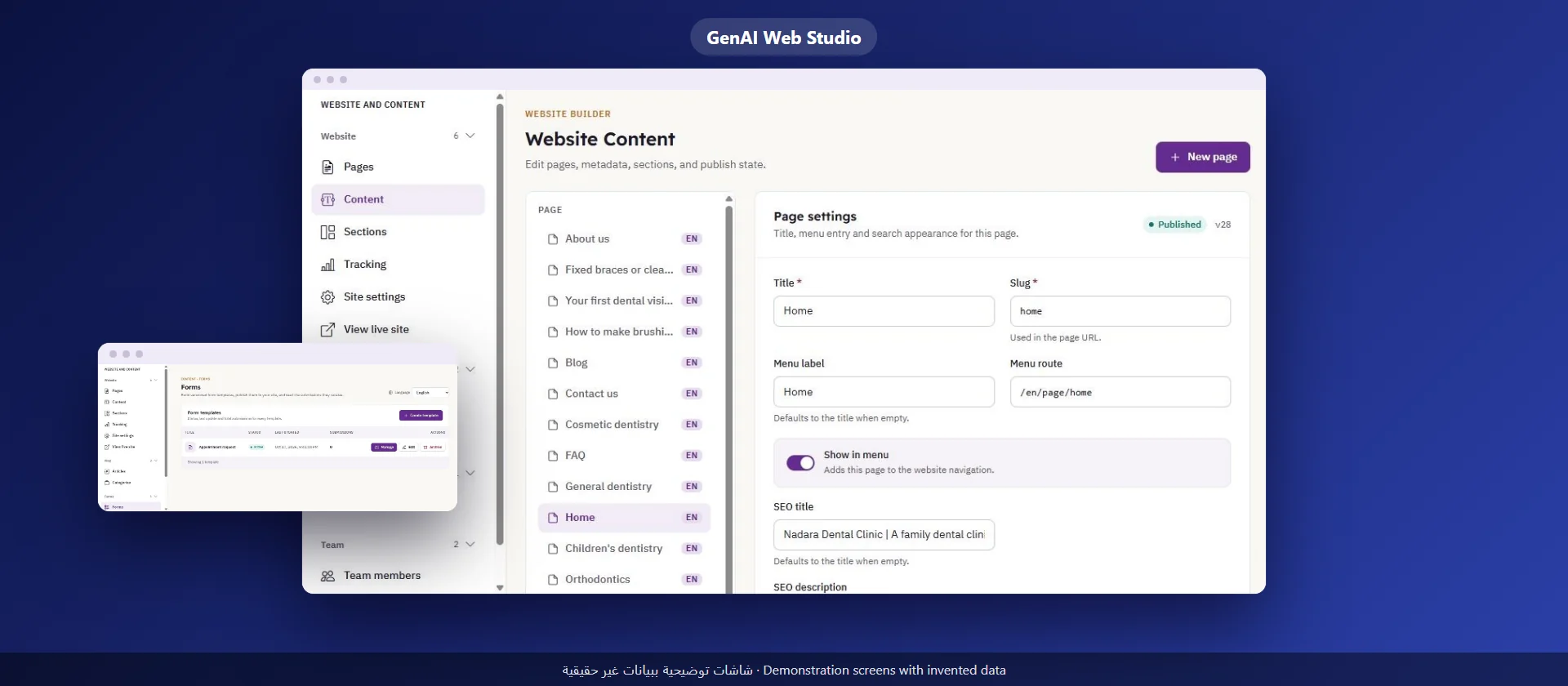
Launch day is the start of a website's life, not the end. Most websites that stop being useful are websites nobody in the company can edit.
Ask these questions before you choose who builds your site:
Clear answers to these questions matter more than a beautiful presentation.
Every form on your site collects personal data: a name, a mobile number, an email address. Saudi Arabia has a Personal Data Protection Law, overseen by the Saudi Data and AI Authority (SDAIA).
Before you launch the site:
These steps protect your clients, and they also build trust while they type in their details.
Most of your visitors will open the site on a phone, and Google itself uses the mobile version of your site when it indexes it. So open every page on your phone before you approve it: is the text readable, and is the contact button visible without searching?
So that people who search for your services can find you:
Showing up in search takes time. Do not trust anyone who promises you the first page by a set date.
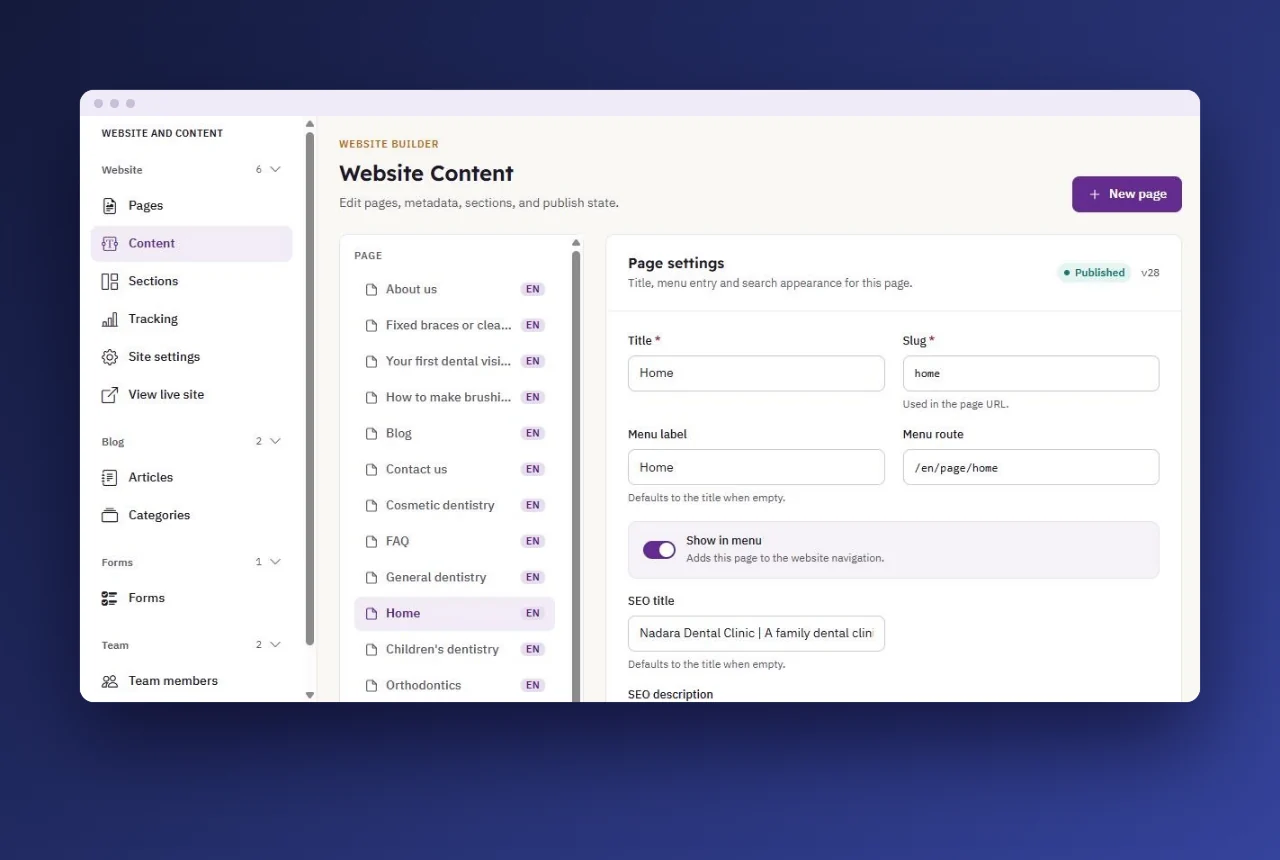
GenAI Web Studio is a website for your company in Arabic and English, with a Dashboard from which your team edits and publishes pages. You can add your team with an account and permissions for each member, publish articles and news, and create forms whose answers you read in the Dashboard. Requests from the "Contact us" page reach you by email.
It is a company website, not an online store: it has no cart and no payment on the site.
Our team sets the system up and runs it with you, step by step. We take a short description of your business and prepare a first design and texts for you to review and edit. Learn more on the GenAI Web Studio page.
A company website presents you and your services and receives contact requests; it suits businesses that close after talking to the client. A store shows products with prices and stock, and needs a cart, payment, shipping and someone who keeps the products up to date.
Home, Services, About us and Contact us. Articles help if you can write regularly about your clients' questions.
You should not. Choose a system that lets your team edit and publish pages, articles and forms from a Dashboard, with an account and permissions for each employee.
It takes time, and no one can promise you a date or a position. What you can do is make the site fast on a phone, give each page a title and description, and publish useful content regularly.
No. It is a company website in Arabic and English with a Dashboard, a team with permissions, articles and forms; it has no cart and no payment on the site.
A guide for clinic and medical center owners in Saudi Arabia: the pages a clinic website needs, contact from a mobile phone, and how the site stays correct after launch
Read more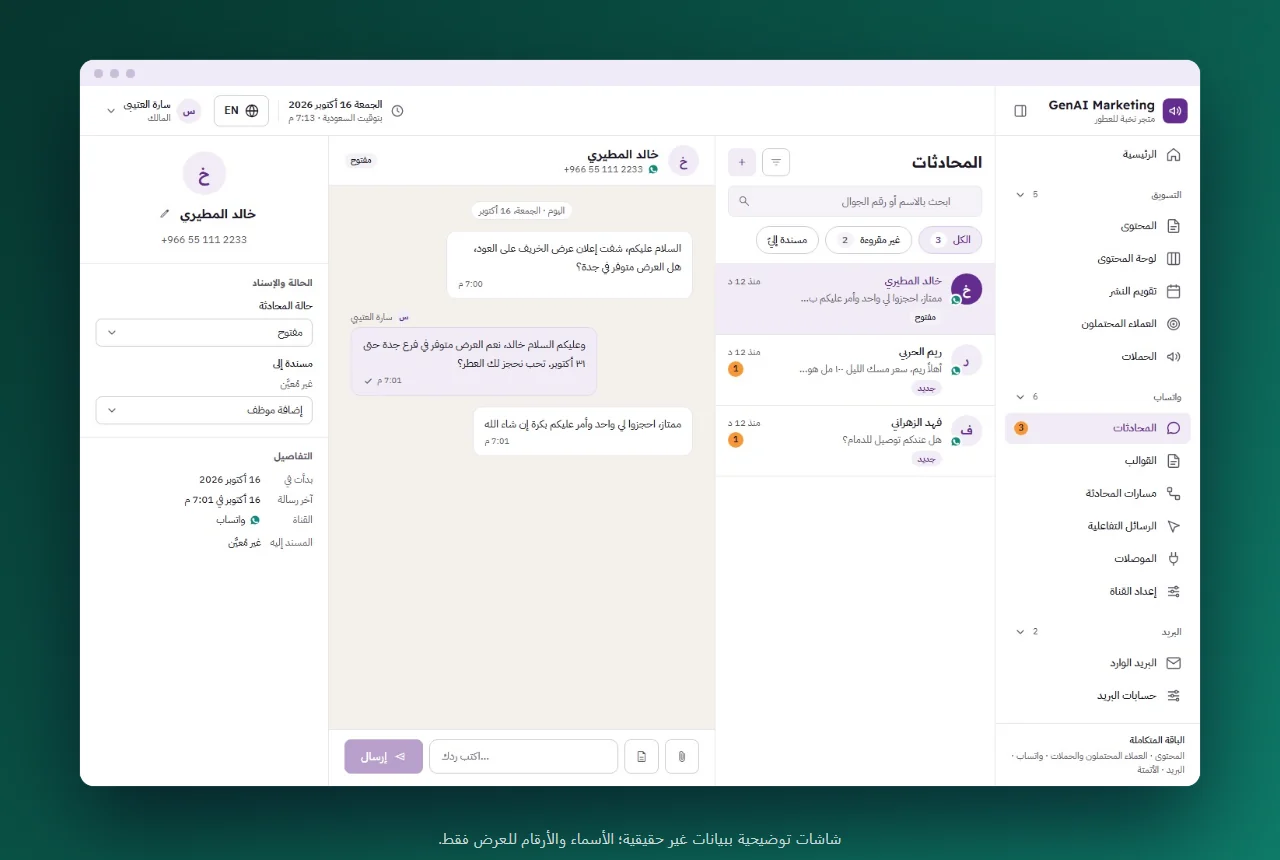
A practical guide for company owners and senior staff in Saudi Arabia: how to choose a first use of AI, try it, measure it, and know what stays with your team
Read more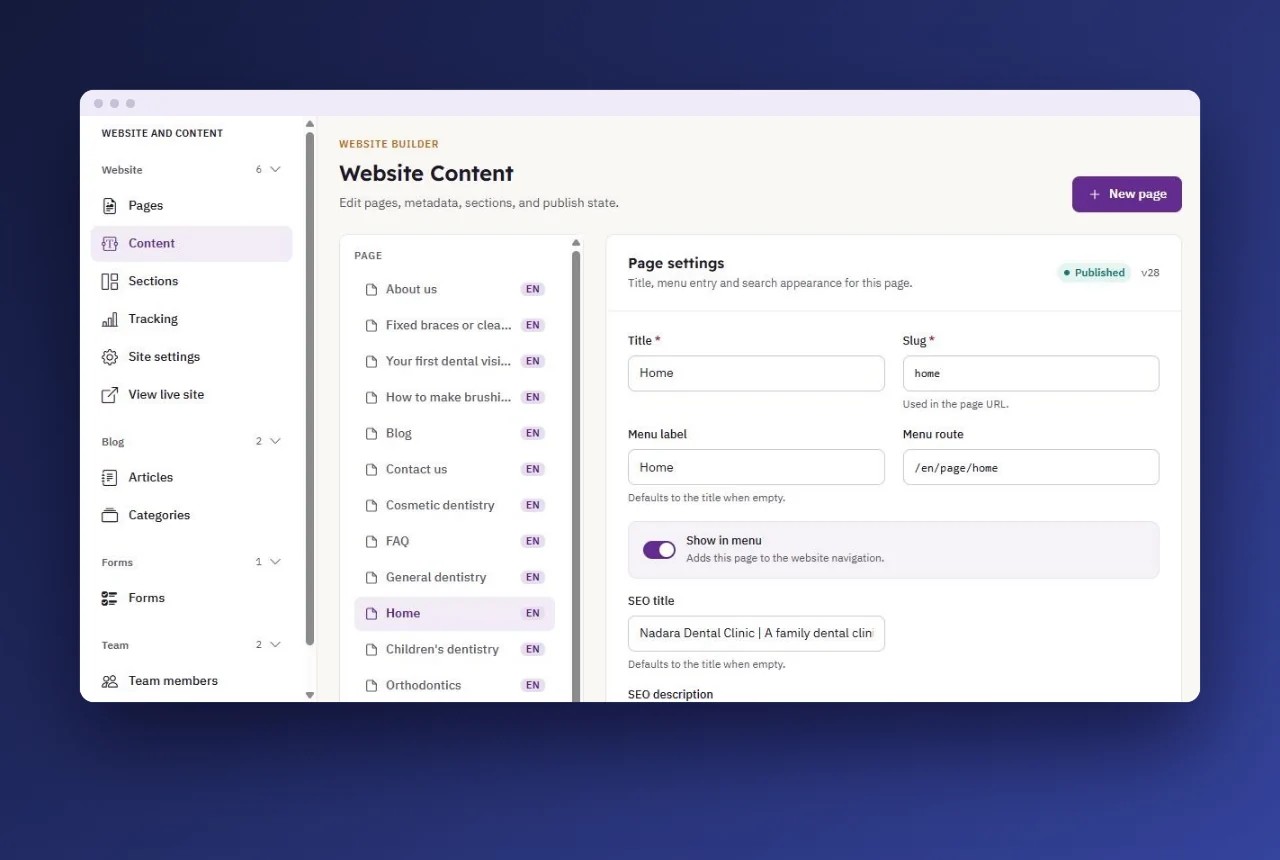
A guide for company owners in Saudi Arabia: what your team edits itself, how to assign roles and permissions, and how to separate the draft from publishing
Read more