
A Website for Your Clinic: What Patients Look For Before They Call
A guide for clinic and medical center owners in Saudi Arabia: the pages a clinic website needs, contact from a mobile phone, and how the site stays correct after launch
Read moreA guide for company owners in Saudi Arabia: where article topics come from, how an article is built, and how to keep a steady pace and measure the result
A useful company blog answers the questions your customers search for before they call you. Choose topics from customer questions and search data, write for the reader first with a clear summary, headings, FAQs and real sources, then publish at a pace you can keep and measure the result after weeks, not after a day.
Most of your customers search before they call: they ask Google about the problem, about how to choose, and about the questions that worry them. The blog is where you answer those questions in your company's name.
What a good blog gives you:
But a blog does not work on its own, and one article brings no result. It is ongoing work.
Do not start from what you want to say, but from what your customers ask:
An example from our own blog: Search Console showed that our pages appeared for the search "إنشاء موقع إلكتروني للشركات" (creating a website for companies), a sign of a topic worth an article.
Google says in its guidance on helpful content that content should be made for people first, not to manipulate search rankings. It gives questions to review your article with, including:
Google also notes that the use of automation or AI in writing should be made clear to readers where they would expect to know it. The test is whether the article is useful and true.
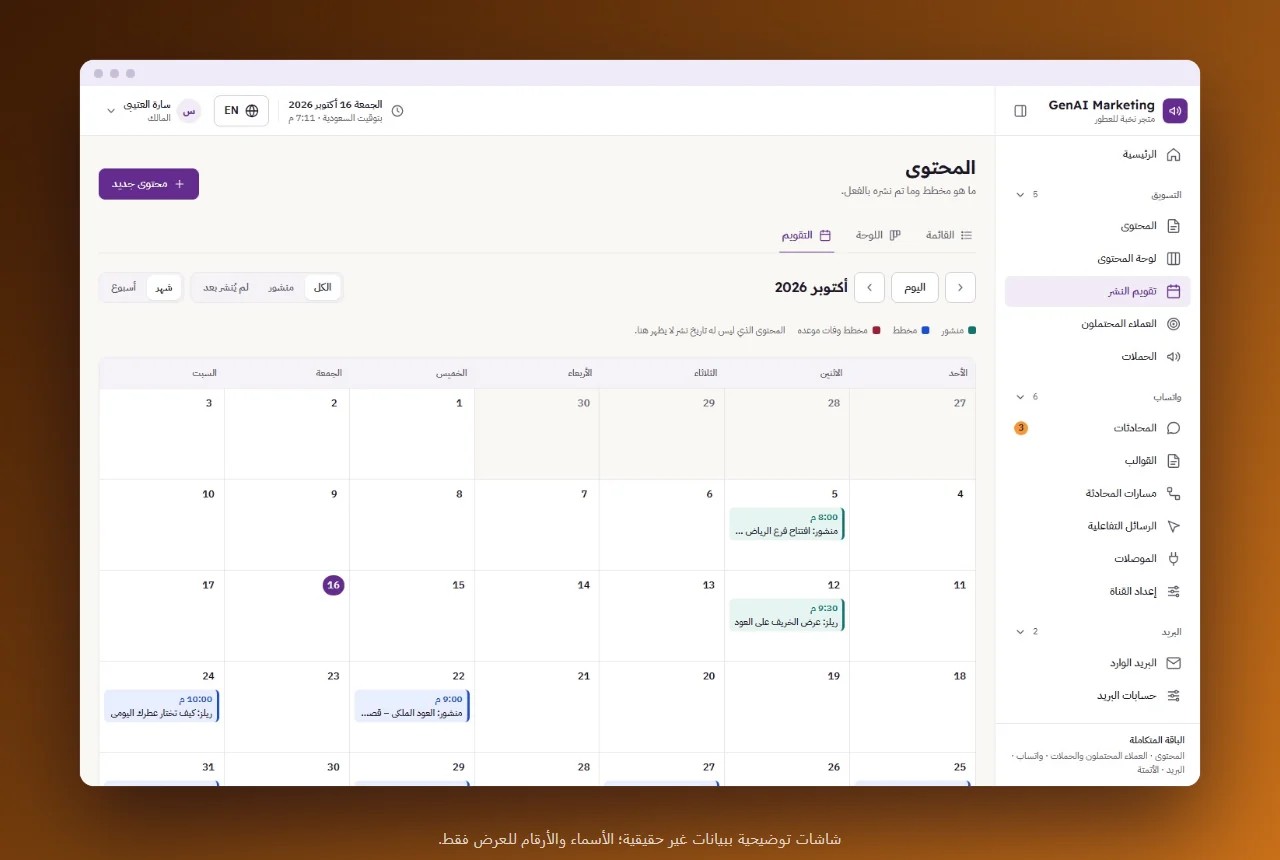
Regularity matters more than volume. Choose a number you can keep up, one or two articles a week for example, and plan it ahead in one calendar where your team sees what is published and what is planned.
When measuring:
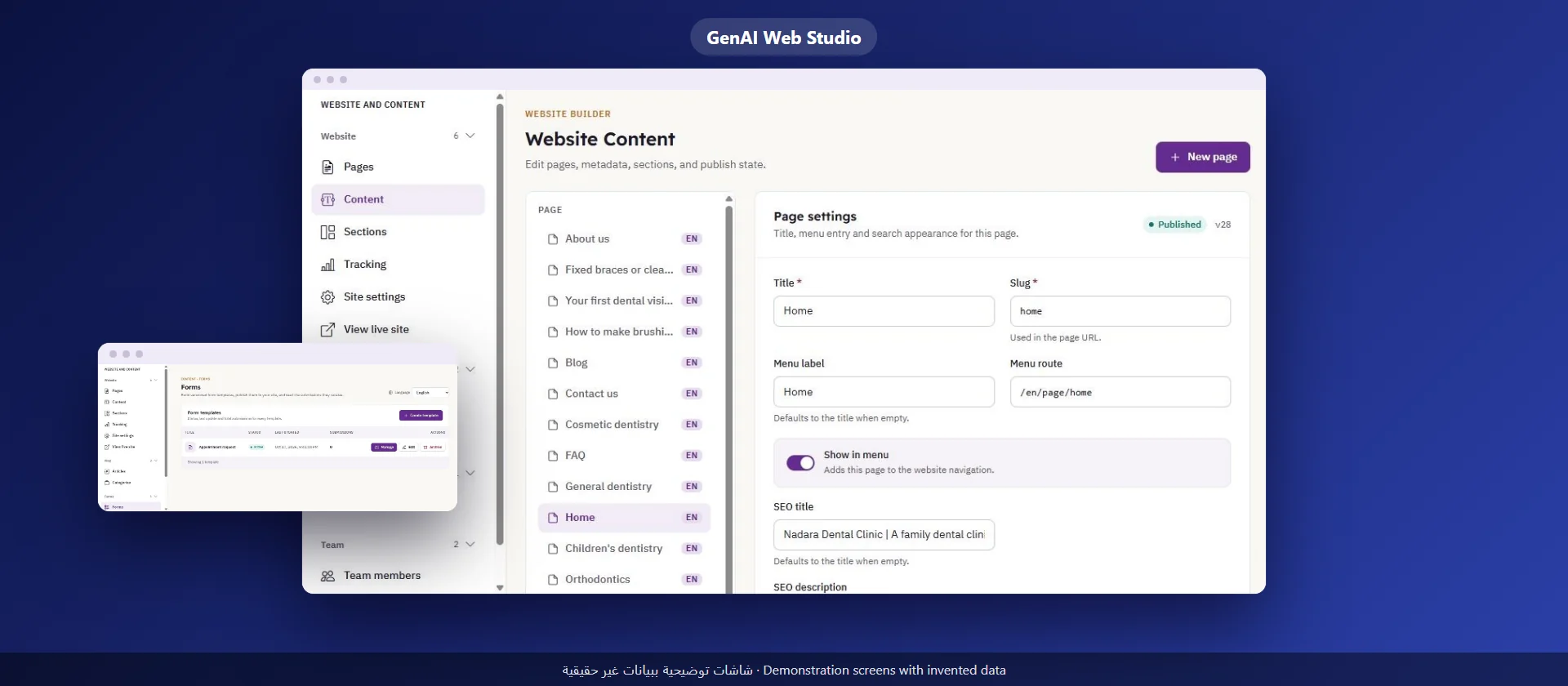
The blog of GenAI Web Studio is part of your company website:
What the blog does not support today: scheduling an article for a later date, tags, and more than one category per article. To plan content you can use the content calendar in the marketing system, which is a separate product.
The number you can keep up. One or two articles regularly are better than five and then a stop.
As long as the question needs. Answer it in the summary, then go into detail, and cut every paragraph that does not help the reader.
In your customers' language. If some of them search in English, write an English version of each article.
After weeks, when Search Console shows it appearing for searches close to its topic and visits start coming from it.
A guide for clinic and medical center owners in Saudi Arabia: the pages a clinic website needs, contact from a mobile phone, and how the site stays correct after launch
Read more
A practical guide for company owners and senior staff in Saudi Arabia: how to choose a first use of AI, try it, measure it, and know what stays with your team
Read more
A guide for company owners in Saudi Arabia: what your team edits itself, how to assign roles and permissions, and how to separate the draft from publishing
Read more